April 15, 2026
Best Application Modernization Solutions in 2026
The application modernization solutions market in 2026 is crowded, noisy, and mostly dominated by the three hyperscalers plus a constellation of application modernization companies and point tools. Buyers asking "which solution should we pick?" quickly discover the real question is "which solution fits what we actually have?"
This guide starts with the modernization approaches worth knowing (the 6 R's, or 7 with AWS's Relocate). From there, it covers the capabilities worth demanding from any solution, the application modernization vendors competing in 2026 (cloud platforms, independent platforms, consulting firms, and the newer Architecture IDE category), and the evaluation criteria that separate programs that ship from ones that stall.
The short version: no solution is best in the abstract. The best application modernization solution is the one that maps to your current architecture, your modernization budget, and your team's operating model. The rest of this guide helps you figure out which that is.
One thing to set up front: in 2026, modernization is shaped by the Shift. AI accelerated coding, and architecture decisions are now the bottleneck. Code ships faster, architecture breaks faster, and without a system for decisions, architecture evolves through drift. Modernization programs that skip that system just produce more drift, faster. The right solution stack starts with decision-grade understanding of what you actually have.
What Are Application Modernization Solutions?
Application modernization solutions, also called application modernization services, are the platforms, application modernization tools, and consulting engagements that help organizations update legacy applications and legacy systems to run on current infrastructure at lower cost. They span cloud platforms (Google Cloud, Azure, AWS), independent application modernization companies (vFunction, CAST), software modernization companies and consulting firms (IBM, DXC, PwC), and a newer architecture-first intelligence category that provides the assessment layer the others assume you have.
The category exists because application modernization, done at enterprise scale, is genuinely complex. A typical enterprise portfolio has hundreds of legacy applications and legacy systems, decades of accumulated technical debt, and legacy business logic no one fully understands. Add cloud computing cost pressure from the CFO, and the problem compounds quickly. No single application modernization vendor, application modernization company, or partner reliably does the whole job across large enterprise portfolios, which is why most enterprise modernization services span multiple application modernization vendors and modernization companies. Modern modernization projects usually combine an architecture intelligence layer, one or two cloud platforms, and either internal teams or an application modernization services partner for execution.
Why Organizations Need Application Modernization
The business drivers are predictable and consistent. Legacy applications and legacy software cost more to run every year, and legacy systems steadily accumulate compliance risk. Security gaps get harder to patch on outdated applications and other legacy systems. Engineers leave because they don't want to work on COBOL or Java 6. And the pace of change in cloud computing and application development keeps accelerating, with AI-driven patterns making modern platforms and cloud native architectures disproportionately valuable. Gartner's forecast that IT services growth in major markets is driven by consulting and application modernization investment is not an accident; application modernization initiatives are where a growing share of the digital transformation budget is going.
Application Modernization vs. Migration vs. Replacement
The three terms get used interchangeably and shouldn't be. Migration is moving legacy applications or legacy systems, usually from on-premises to the cloud, with minimal change. Modernization is changing the application itself (runtime, architecture, data model, code, or business logic) to take advantage of the new environment. Replacement is retiring the application and its business logic, then buying or building something else entirely. Most real modernization initiatives do all three across different existing applications in the same portfolio.
Types of Application Modernization Approaches
Every serious application modernization strategy rests on the same core framework: the 6 R's. Originally coined in the context of cloud migration and expanded by AWS to 7 R's with the addition of Relocate, it's the default lens for picking an approach per application.
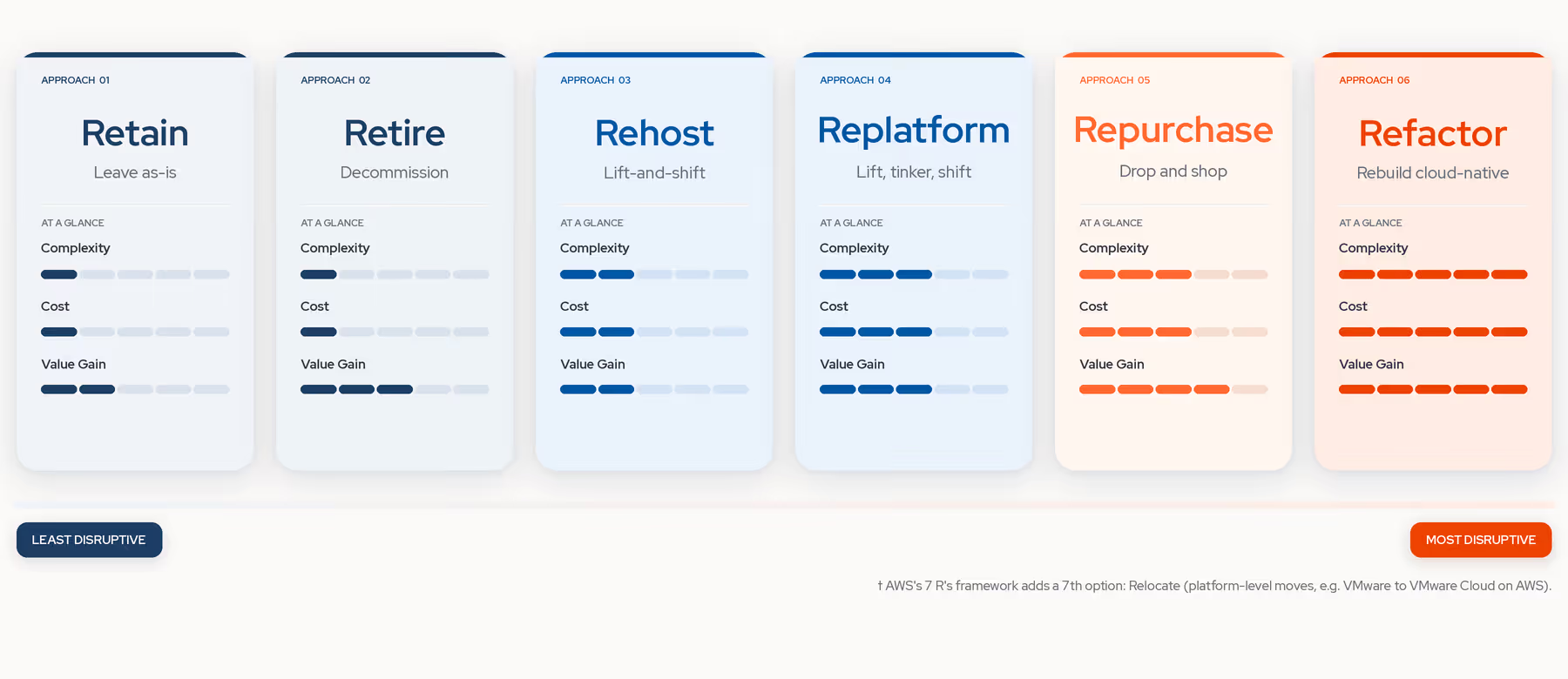
The 6 R's of Application Modernization
Choosing the Right Approach for Each Application
The mistake most modernization efforts make is picking one R across the whole portfolio. It almost always underperforms. A mature application modernization framework assigns a different approach to each application based on three factors: business value, technical condition, and dependency blast radius. Simple legacy applications with low strategic value get Retire or Retain. Legacy systems with strategic value and tolerable technical debt get Replatform. The handful that genuinely constrain the business and can't be replaced off-the-shelf get Refactor. Everything else settles in the middle.
The full logic of scoring and sequencing lives in our guide to running an application modernization assessment, which covers the scoring criteria, dependency mapping, and roadmap-building that sit upstream of picking application modernization vendors and application modernization companies.
Key Capabilities to Look for in Modernization Solutions
Every vendor in this category has a product tour. The capabilities that actually matter are less glamorous than the product tour. A good evaluator asks: Can this solution tell me what I have, tell me what to do, and do any of it automatically?
Architecture Assessment and Discovery
The first capability any modernization solution needs is honest visibility into the existing architecture and estate. That means an automatically-updated inventory of existing applications, dependencies, data flows, cloud services, and third-party integrations. If the solution asks you to upload a spreadsheet or fill in a questionnaire, the assessment is only as accurate as the person filling it in, and CMDB data is famously inaccurate. Solutions that pull from runtime signals, cloud APIs, and code repositories beat questionnaire-driven assessments every time.
Cloud Native Transformation
For the subset of legacy applications heading to Refactor or Replatform, the solution should support the target runtime directly. That usually means managed containers and cloud native infrastructure (Kubernetes, Cloud Run, AKS, EKS, ECS), serverless (Cloud Functions, Lambda, Azure Functions), managed databases, and modern message queues. Cloud native application modernization solutions from the hyperscalers excel here because they control the destination. Independent platforms depend on integrations to cover the same ground.
Integration and API modernization is often a parallel digital transformation track, especially for organizations moving from ESBs or tightly coupled existing systems to cloud native architectures and API-first designs. Evaluate whether your chosen solution treats the integration layer as a first-class concern or punts it to a separate workstream.
Automation and AI-Powered Analysis
The application modernization market and enterprise application development in 2026 look different from 2022 because AI and intelligent automation can now read, summarize, and translate code at scale. GitHub Copilot app modernization, IBM WatsonX Code Assistant, and AWS Transform's analysis output feeding into external code assistants all fit this pattern. Evaluate specifically what the AI does (assess? recommend? generate refactored code?) because the three are very different capabilities with very different reliability profiles.
Observability and Continuous Optimization
Modernization isn't a project that ends. It's a capability. Solutions that treat it as a one-time engagement produce a PowerPoint and leave you where you started a year later. Solutions that establish ongoing architecture observability, cost monitoring, and recurring re-assessment produce modernized applications and sustained business outcomes.
Top Application Modernization Solutions and Platforms
The application modernization companies in this space sort into four groups: cloud provider application modernization services, independent platforms, software modernization companies and consulting firms, and architecture-first intelligence platforms. Most mature modernization programs use one from the cloud platform group, plus one from the intelligence or independent group.
The Architecture IDE Category
The newest category is the Architecture IDE. It doesn't run your workloads, and it doesn't refactor your code. It answers the question that sits upstream of both: what do we have, how is it connected, and where should we actually start? We don't replace coding IDEs or cloud migration tools. We define what they execute.
Catio is the Architecture IDE for modernization. It turns your real system and business context into decision-grade understanding, then walks teams from a modernization question to a committed decision and an execution-ready design. That's the spec your coding IDE and infra platform actually build against. Archie, Catio's conversational architecture copilot, answers questions against your live system, the decisions behind it, and the constraints that should hold as the system evolves. Ask "which applications share this database?" or "what's the blast radius of modernizing this service?" and get a decision-grade answer rather than a stale diagram.
Catio isn't a cloud migration tool, a coding IDE, or a consulting engagement. It sits above them: Catio defines what they execute against. We don't replace coding IDEs. We define what they execute. The argument: you shouldn't pick a modernization runtime, vendor, or partner until you actually know what you're modernizing and why. An architecture-first modernization assessment is what produces that clarity.
Cloud Provider Application Modernization Services
Google Cloud Application Modernization (CAMP) bundles Google Cloud Platform's modern platforms (GKE, Cloud Run, Cloud Functions, App Engine, Migrate to Containers, Apigee, Database Migration Service) with the Cloud Application Modernization Program, which uses DORA research as its scoring basis. Best for organizations already committed to Google Cloud Platform. As with any cloud platform service, the recommendations optimize toward Google's own managed runtimes.
Azure App Service + Azure Migrate is a Microsoft-native stack for bringing on-premises web apps, APIs, and databases into App Service (PaaS) or AKS (containers). The App Service Migration Assistant handles agentless migration of ASP.NET and PHP workloads. GitHub Copilot is increasingly used for AI-assisted upgrades and remediation on .NET and Java workloads. Best when .NET, Windows, or SQL Server dominates the estate.
AWS Mainframe Modernization / AWS Transform targets the narrowest but most painful slice: mainframe COBOL, PL/I, and Assembler workloads. AWS Transform can assist with converting Assembler to COBOL or modernizing mainframe applications to Java services. Important 2026 caveat: the AWS Mainframe Modernization managed runtime environment is no longer open to new customers as of November 7, 2025. Self-managed options and AWS Transform for mainframe remain available. Evaluate carefully if a managed runtime was your preferred target.
Independent Modernization Platforms
vFunction analyzes Java and .NET applications at both the code and runtime level using OpenTelemetry instrumentation, then produces architecture graphs, dead code reports, and candidate service boundaries.
CAST Software provides portfolio-level static analysis across hundreds of languages, frameworks, and databases, plus an imaging product that reconstructs cross-tier dependency graphs from UI through application code to the database. CAST Highlight is distributed through Microsoft AppSource as a Cloud Adoption Framework assessment partner tool, which makes it a natural first-pass portfolio scanner for Azure-bound modernization projects.
How to Evaluate Application Modernization Solutions
Evaluation criteria that actually predict success have less to do with feature lists and more to do with fit. A solution that looks great in the demo can still be wrong for your organization if it doesn't match your starting point.
Start with Architecture Visibility
The single strongest predictor of modernization success is accurate, current visibility into the existing architecture. Programs that skip this step and jump to picking a cloud platform's modernization service end up building roadmaps on the wrong inventories and discovering the real dependency graph mid-project. Unified architecture visibility isn't optional. It's the prerequisite that determines whether the rest of the program can execute.
If a candidate solution can't tell you what you actually have in under 30 days, the program will not ship on time. Every other decision is downstream of this one.
Assess Business Value vs. Technical Debt
Each application needs a two-dimensional score: business value (does this thing matter?) and technical condition (is this thing hurting?). Cross-tab those into a simple 2×2, and the modernization priorities fall out. High-value + high-debt wins the Refactor budget. Low-value + high-debt gets Retired. High-value + low-debt stays put. Low-value + low-debt stays off the list.
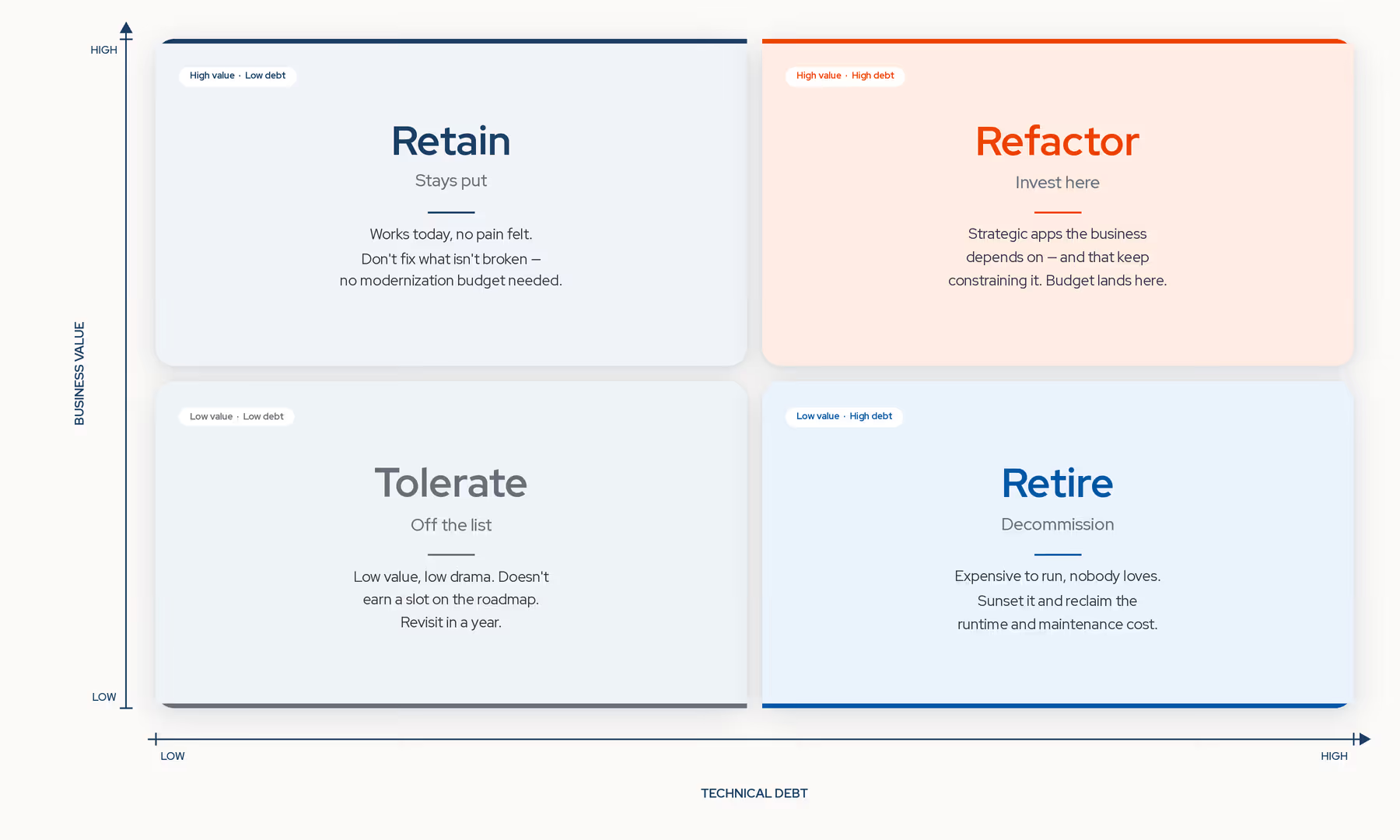
The trap is that both dimensions are subjective without an operating rubric. Solutions that quantify these consistently across the portfolio produce usable modernization plans. Solutions that rely on workshops and PowerPoint usually don't.
Consider the Total Cost of Modernization
The sticker price of a modernization solution is one input. The full cost includes migration effort, runtime consumption, the cost of errors during transition, the cost of developer hours redirected from feature work, and the ongoing cost of operating the modernized applications and estate. Architecture-level total cost of modernization analysis surfaces cost drivers that billing-only tools miss: duplicate services, over-provisioned instances, and data transfer between services that shouldn't be chatting.
Without this view, modernization programs often underestimate total cost materially. With it, the business case is defensible.
Factor in Organizational Readiness
Even the best application modernization tools fail if the organization isn't set up to execute. Unclear ownership, missing platform teams, and no migration runway will stall any modernization effort, regardless of which application modernization vendors or application modernization companies are on the contract. A solution evaluation that ignores organizational readiness and critical business processes is optimizing the wrong variable.
Common Pitfalls in Application Modernization
Three failure modes account for the bulk of stalled modernization projects.
Modernizing Without Understanding Dependencies
The single most common failure mode is starting a Refactor on a legacy application without a current map of what depends on it. The Refactor looks clean in isolation. Mid-project, the team discovers that six other legacy applications consume its message queue, two external partners hit its API, and the shared database schema is tightly coupled to a reporting system nobody remembered. Costs triple, timelines slip, and trust erodes.
Solutions that treat dependency mapping as a first-class capability (not a questionnaire step) prevent this. Solutions that start with the runtime target and work backward usually don't catch it in time.
Choosing a One-Size-Fits-All Approach
Picking one R across the whole portfolio is a form of wishful thinking. Lift-and-shift the whole estate, and you've just moved your legacy software problems into the cloud at consumption-based pricing. Refactor the whole estate, and you'll run out of budget and goodwill before finishing. The discipline is accepting that a modernization program is 10 existing applications doing one thing, 30 doing another, and 200 staying put. Tools and services that force a single-approach decision usually aren't worth the pitch.
Underestimating Data Migration Complexity
Data gravity is the silent killer. Moving an application is often tractable. Moving its data, maintaining consistency during the cutover, and keeping downstream legacy systems in sync is where programs miss deadlines. Any serious modernization solution evaluation should spend a meaningful chunk of time on data migration tooling, application development runbooks, and business processes that span old and new, not just application runtime features.
Conclusion
The best legacy application modernization solution in 2026 is the one that fits your current architecture, your budget, and your team's operating model. Cloud platforms and their bundled application modernization services are strong when you've already committed to a target cloud. Independent application modernization companies like CAST are strong for portfolio-level assessment or complex monolith decomposition. Software modernization companies like IBM still matter when the estate is genuinely massive, and the internal bench is thin. Architecture-first intelligence tools like Catio sit one layer above the rest, answering the visibility question that determines whether any of the others can execute.
Start with the architecture you actually have, not the one you think you have. The rest of the program is downstream of that clarity.
Ready to make a real architecture decision instead of more slides? Start a real architecture decision in Catio's Architecture IDE, or watch a demo end to end.
FAQ
What is the difference between application modernization and cloud migration? Cloud migration is the act of moving an application from one environment to another, usually from on-premises to the cloud. Legacy application modernization is the broader practice of changing the application (runtime, architecture, code, or data model) so it runs well in the target environment. Most real modernization programs do both: they migrate some applications and modernize others, picking the approach per application based on business value and technical condition.
Which application modernization solution is best? No single solution is best across the board. The right application modernization solution depends on your target cloud platforms, the shape of your legacy estate, and whether you need architecture visibility, runtime migration, or ongoing operational intelligence. A common pattern in modernization efforts is combining a cloud platform's migration service (Google Cloud, Azure, AWS) with an architecture-first intelligence platform that tells you what to modernize and in what order.
What are the 6 R's of application modernization? The 6 R's are Retain, Retire, Rehost, Replatform, Repurchase, and Refactor. They describe the strategic options available for each application in a portfolio. AWS's Prescriptive Guidance documents a 7 R's version that adds Relocate for platform-level moves. Serious programs assign a different R to different applications rather than picking one for the entire estate.
How long does an application modernization program take? A first-pass portfolio assessment usually runs several weeks to a few months. Individual application modernization engagements range from weeks (a straightforward Rehost or Replatform) to years (a full Refactor of a mission-critical monolith). Program-level timelines typically unfold across 18 to 36 months for a meaningful enterprise estate.
Share this Post